With the lack of infrastructure in Cambodia it is no wonder that the government has come to see toll roads as having the potential of providing rapidly built roads with little or no costs on the government side. On national scale the main highway between the capital and the port city of Sihanoukville is run by a toll company. The company provides road maintenance in return for the permission to charge the users for toll at the start and finish of the road. Considering the condition of this road, everyone seems quite satisfied with this agreement; it certainly is the best highway in the country.
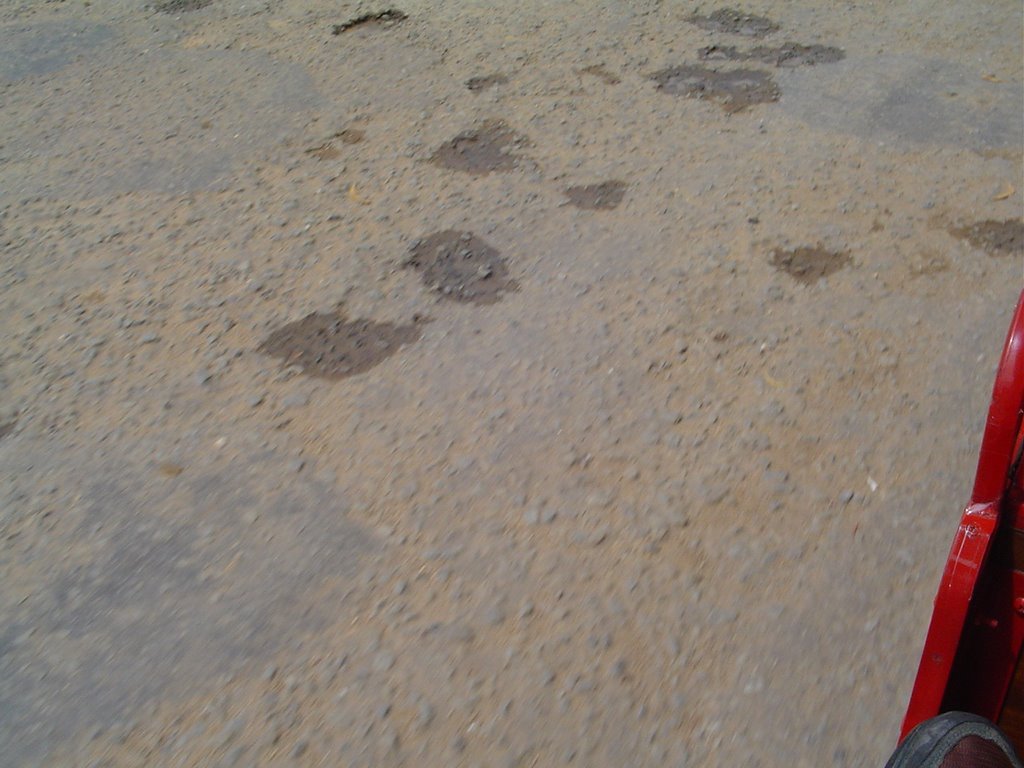
With this success in mind, cash-strapped local governments have started more toll road initiatives. A good example is the International School street here in Phnom Penh. This road provides a short cut to the main highways south and the airport. More importantly it leaves the user the possibility of avoiding the traffic snarl where a ring road meets the main access road out of the city and two of the most important boulevards in the city: chaos and anarchy. However, the toll road is built on the premise that the builder will invest all money he currently receives for providing the link in the upgrade. Well, at least that’s what Crossing Cambodia concludes. It has a poor road surface and until recently there were potholes. For this, cars are charged roughly 0,25 $US, not much, but usually when you pay for something (in this case a road) you expect to receive something, at the very least you could hope to have just as good a road as government road.
Today’s Cambodian Daily (5 October 2006) reports extensively on a new toll road in the provincial capital of Takeo. The government does not have the money to provide an access road to a national highway and asks a businessperson to invest. This person invests 600,000 $US in a 4km road and receives a 30 year concession to ask the public for funds. The new road runs parallel to an older road, which apparently is more or less crowded. The provincial governor mentions that the road was constructed ‘to reduce traffic jams and road accidents’ elsewhere. Well that all sounds swell. Only question Crossing Cambodia has is how is the owner going to get his money back? Without inflation he needs to make 20,000 $US / year or 54 $ /day. Let’s for this argument’s sake say that the constructer needs $100 per day to retrieve his initial investment. Will he succeed? Apparently the constructor is getting nervous, because he has just raised the tariff from 0,25 $US for taxi’s to 0,83 $US. This coincided with the provincial government forcing taxi-drivers to use the new road (citing the above). So now the toll road is built for public use but forcibly asking drivers to pay. In such circumstances one wonders how the local situation has improved? Would a public road not have been the best solution and getting the funds from road taxes?
A short side street on this subject was a proposal launched in the beginning of the year which entailed exempting all parliamentarians from paying toll on the toll roads. The reason given was that they are very busy and do not have the time to wait in line and probably wait for the cashier to find change for the hundred dollar bill.
 A section of a toll road