Sometimes reporting on transport concerns in Cambodia has much to do with 'Aladdin and his magic lamp", Alladin being Cambodian officials, the lamp representing the 'idea'.
Take for example a number of messages the last week.
Case 1: Cambodia to set up new national airline
As reported all over the world, but here linking to the article on the KI Media website. The essence: Cambodia's government strikes a deal with an Indonesian company allowing it to operate a national flag carrier in return for a significant amount of the profit.
Two problems in this story, they are 'national' and 'profit'. The current situation in Cambodian skies is that there is no government owned airline (though there are other Cambodian companies such as Royal Khmer and President Airlines), a unique factor which has attributed to the overall growth of the tourism sector, one of the main pillars of Cambodia's economy. With the absence of vested (national and thus political) interests, the Cambodian government has been encouraging as much business as possible. the more the merrier. Nearly everyone can fly in to / out of Phnom Penh and whether they make a profit or not is not the Cambodia's government's concern. The one exception is the Bangkok - Siem Reap sector which is run as a monopoly by Bangkok Airways, condoned by the current Cambodian government.
So why now try to set up a national flag carrier? With the significant recent growth of tourism, the perception has been that Cambodia's economy fails to profit sufficiently. One problem is the lack of national production meeting tourists demand. As such nearly everything is flown in, leaving just construction and employment in tourist services as significantly contributing to the Cambodian economy. To address this 'leakage' problem, the idea apparently is to get an airline in place and tax the profits. One problem is that even if profits are forthcoming (a big problem for other flag carriers in Southeast Asia) accounting procedures in Cambodia are hardly established meaning that the Cambodian government may well see nothing of it's share of the profits. Even though they have a substantial part of the airline, the aircraft will probably be leased, so the government is getting 51% of the airlines assets which equals zero, which in Crossing Cambodia's calculation is still zero.
That said, in the meantime there may be the possibility to commandeer seats or even a whole aircraft so as to get officials kids/wives to school/shopping in Bangkok / Hong Kong, a phenomena which has arisen in recent years just over Cambodia's eastern border.
But with the current 'open skies' policy, there is hardly any room for extra flights (i.e. there is perfect competition). This implies that these policies must change so as to allow the national carrier to access profitable routes (to / from Thailand and / or China) or (so as not too frighten the current carriers) to make sure any future growth in flights to Cambodia is awarded to the national flag carrier.
Even though some questions remain (how big will the flag carrier be?), with the signature of Peter Sondakh, the Cambodian government seems to have a guarantee that future payments to the state will take place. Mr. Sondakh is an Indonesian with quite some experience and very deep pockets: his company is currently trying to take over the Indonesia flag carrier, Garuda. However, Indonesia has in the past had massive problems with corruption as well as having a dismal record in regulating it's skies, not necessarily aspects which would look good on a potential airline's investor's report card. With Cambodia's recent past in aviation littered by accidents and failed airlines one might wonder whether or not this investment will assist Cambodia at all.
But one thing that does stick is that in the run-up to elections, playing to nationalistic sentiments surely must pay off. But whether it makes economic sense?
Case 2: French company plans to operate trams in Cambodia
The full story here. The essence. Big French muliti-billion company (Alsthom) devise plan to have it's products up and running in Cambodia. It impresses local officials who will now support it. No mention is made of who will pay for this.
Possibly this latter, is part of the overall strategy: here we are, we will solve all your plans, you just have to start to yearn /crave for it, then cough up some money (in case no money is forthcoming maybe we can ask French 'gouvernement' for some bridging finance, possibly with some EU money somewhere along the track). Whether or not it solves the problem is entirely besides the question, who doesn't want to impress all and sundry (including voters) with a swish train / tram / lorrie which does not seem to cost anything?
Just a few months back, the Thai were here proclaiming how their Skytrain would be up and running in the near future.
Possibly both the Thai and the French should heed the experience of the Japanese who couldn't even get a bus system running within Phnom Penh. Let's hope the Chinese can get a reliable taxi system working (should not be beyond them).
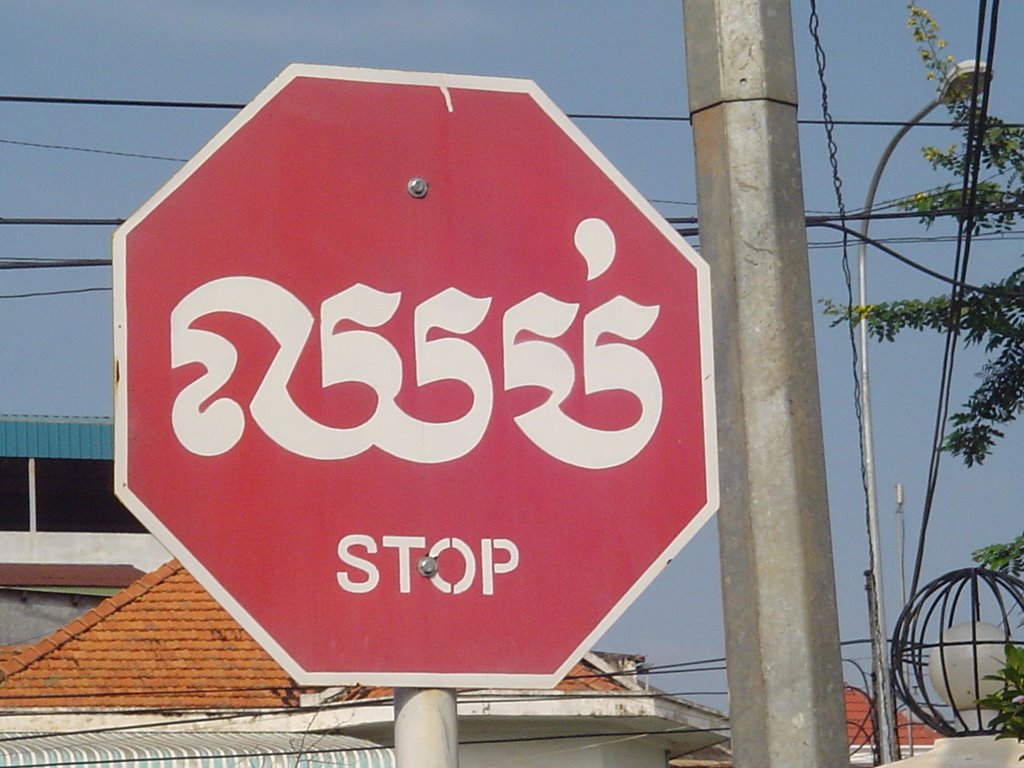
So should we not dream? Yes, no problem with that, but current problems with traffic congestion are simply due to the lack of adhering to a simple language of red light means stop. Last Tuesday evening Crossing Cambodia plied through Monivong Boulevard during rush hour while it was totally packed, but only due to the fact that the main crossings were blocked and blocked again. Get everyone to stop when lights are red, go when green and the need for sophisticated systems of transport will not be required at least for the near future.
If starting now with a city bus system , this would be effective in 1-2 years time and in 5 years time look for a mass transport system, preferably underground, that's how it is done internationally, even in Bangkok and Paris!
Case 3: Dong Thap [province in vietnam] approves road link to Cambodia. The link, the essence: with just 4.5 million dollars this Vietnamese province will build a road, basically for their own satisfaction. Where's the money coming from?[everybody suddenly takes an interest in their shining shoes and /or are all the lights on?]
Case 4:Cambodia asks China, India, Japan to help improve rural projects
The link, the essence of the stories: Hun Sen (the ever-serving Cambodian PM) needs to develop the country fast (after all elections are coming up in six months) so he now requests China and Japan for hand-outs. What the Chinese get out of the deal Crossing Cambodia hardly knows, but they tend to look well after themselves (as do all other 'donors'). With Toyota cars making up half of the standard Cambodian car-park, their 'donation' will always reap handsome rewards.
But what do the cases have in common? A lack of vision, a lack of will to tackle the problems themselves, a absolute disregard to finances ('Cambodia is such a poor country, please forgive us our debts') and a faith in piecemeal approaches to overall economic and social problems. It all seems to be tied in with power, the power to have and how to keep this power. Well, as long as it's not Crossing Cambodia's money, it's not my problem. What does worry Crossing Cambodia is that in the event of an adverse economic climate elsewhere (the states?) how at all will the country survive? On nearly all aspects Cambodians rely and continue to rely on having absolute faith in the goodness of foreigners / foreign countries to dole out money to address their simple problems. In Thailand you win elections promoting self-sufficiently, here presumably by passing the bill on to future generations, be they Cambodian or foreigners. Let's hope that the money tap continues to be open for a long, long time, while the local politicians start rubbing up the lamp once more!
Take for example a number of messages the last week.
Case 1: Cambodia to set up new national airline
As reported all over the world, but here linking to the article on the KI Media website. The essence: Cambodia's government strikes a deal with an Indonesian company allowing it to operate a national flag carrier in return for a significant amount of the profit.
Two problems in this story, they are 'national' and 'profit'. The current situation in Cambodian skies is that there is no government owned airline (though there are other Cambodian companies such as Royal Khmer and President Airlines), a unique factor which has attributed to the overall growth of the tourism sector, one of the main pillars of Cambodia's economy. With the absence of vested (national and thus political) interests, the Cambodian government has been encouraging as much business as possible. the more the merrier. Nearly everyone can fly in to / out of Phnom Penh and whether they make a profit or not is not the Cambodia's government's concern. The one exception is the Bangkok - Siem Reap sector which is run as a monopoly by Bangkok Airways, condoned by the current Cambodian government.
So why now try to set up a national flag carrier? With the significant recent growth of tourism, the perception has been that Cambodia's economy fails to profit sufficiently. One problem is the lack of national production meeting tourists demand. As such nearly everything is flown in, leaving just construction and employment in tourist services as significantly contributing to the Cambodian economy. To address this 'leakage' problem, the idea apparently is to get an airline in place and tax the profits. One problem is that even if profits are forthcoming (a big problem for other flag carriers in Southeast Asia) accounting procedures in Cambodia are hardly established meaning that the Cambodian government may well see nothing of it's share of the profits. Even though they have a substantial part of the airline, the aircraft will probably be leased, so the government is getting 51% of the airlines assets which equals zero, which in Crossing Cambodia's calculation is still zero.
That said, in the meantime there may be the possibility to commandeer seats or even a whole aircraft so as to get officials kids/wives to school/shopping in Bangkok / Hong Kong, a phenomena which has arisen in recent years just over Cambodia's eastern border.
But with the current 'open skies' policy, there is hardly any room for extra flights (i.e. there is perfect competition). This implies that these policies must change so as to allow the national carrier to access profitable routes (to / from Thailand and / or China) or (so as not too frighten the current carriers) to make sure any future growth in flights to Cambodia is awarded to the national flag carrier.
Even though some questions remain (how big will the flag carrier be?), with the signature of Peter Sondakh, the Cambodian government seems to have a guarantee that future payments to the state will take place. Mr. Sondakh is an Indonesian with quite some experience and very deep pockets: his company is currently trying to take over the Indonesia flag carrier, Garuda. However, Indonesia has in the past had massive problems with corruption as well as having a dismal record in regulating it's skies, not necessarily aspects which would look good on a potential airline's investor's report card. With Cambodia's recent past in aviation littered by accidents and failed airlines one might wonder whether or not this investment will assist Cambodia at all.
But one thing that does stick is that in the run-up to elections, playing to nationalistic sentiments surely must pay off. But whether it makes economic sense?
Case 2: French company plans to operate trams in Cambodia
The full story here. The essence. Big French muliti-billion company (Alsthom) devise plan to have it's products up and running in Cambodia. It impresses local officials who will now support it. No mention is made of who will pay for this.
Possibly this latter, is part of the overall strategy: here we are, we will solve all your plans, you just have to start to yearn /crave for it, then cough up some money (in case no money is forthcoming maybe we can ask French 'gouvernement' for some bridging finance, possibly with some EU money somewhere along the track). Whether or not it solves the problem is entirely besides the question, who doesn't want to impress all and sundry (including voters) with a swish train / tram / lorrie which does not seem to cost anything?
Just a few months back, the Thai were here proclaiming how their Skytrain would be up and running in the near future.
Possibly both the Thai and the French should heed the experience of the Japanese who couldn't even get a bus system running within Phnom Penh. Let's hope the Chinese can get a reliable taxi system working (should not be beyond them).
So should we not dream? Yes, no problem with that, but current problems with traffic congestion are simply due to the lack of adhering to a simple language of red light means stop. Last Tuesday evening Crossing Cambodia plied through Monivong Boulevard during rush hour while it was totally packed, but only due to the fact that the main crossings were blocked and blocked again. Get everyone to stop when lights are red, go when green and the need for sophisticated systems of transport will not be required at least for the near future.
If starting now with a city bus system , this would be effective in 1-2 years time and in 5 years time look for a mass transport system, preferably underground, that's how it is done internationally, even in Bangkok and Paris!
Case 3: Dong Thap [province in vietnam] approves road link to Cambodia. The link, the essence: with just 4.5 million dollars this Vietnamese province will build a road, basically for their own satisfaction. Where's the money coming from?[everybody suddenly takes an interest in their shining shoes and /or are all the lights on?]
Case 4:Cambodia asks China, India, Japan to help improve rural projects
The link, the essence of the stories: Hun Sen (the ever-serving Cambodian PM) needs to develop the country fast (after all elections are coming up in six months) so he now requests China and Japan for hand-outs. What the Chinese get out of the deal Crossing Cambodia hardly knows, but they tend to look well after themselves (as do all other 'donors'). With Toyota cars making up half of the standard Cambodian car-park, their 'donation' will always reap handsome rewards.
But what do the cases have in common? A lack of vision, a lack of will to tackle the problems themselves, a absolute disregard to finances ('Cambodia is such a poor country, please forgive us our debts') and a faith in piecemeal approaches to overall economic and social problems. It all seems to be tied in with power, the power to have and how to keep this power. Well, as long as it's not Crossing Cambodia's money, it's not my problem. What does worry Crossing Cambodia is that in the event of an adverse economic climate elsewhere (the states?) how at all will the country survive? On nearly all aspects Cambodians rely and continue to rely on having absolute faith in the goodness of foreigners / foreign countries to dole out money to address their simple problems. In Thailand you win elections promoting self-sufficiently, here presumably by passing the bill on to future generations, be they Cambodian or foreigners. Let's hope that the money tap continues to be open for a long, long time, while the local politicians start rubbing up the lamp once more!
 Cambodia's main railroad from phnom Penh to the coast!